Showing posts with label TrueLearn. Show all posts

Monday, August 15, 2016

Strokes, Hemorrhages, and Aneurysms

Strokes
Strokes and TIAs will 100% for sure be on your PANCE/PANRE/PACKRAT, you name it. While historically, the PANCE and PACKRAT are only 6% Neurology questions, these are a few that you shouldn’t miss. After completing my general neurology rotation, I quickly learned that the answers to these complex puzzles was definitely time-dependent. Can you think on your feet and generate a differential diagnosis? Attention to tiny details was crucial for Neurology because that’s how you can tell what part of the brain the ischemia/infarction is coming from.


I hope this review helps you regardless of which avenue you find it useful. Good luck and make sure to check out TrueLearn’s free sample questions below! The vignette style questions are exactly what you need to prepare yourself for PANCE related questions. Good luck!


Transient Ischemic Attack, Cerebrovascular Accidents (CVA) or Stroke, Bell’s Palsy
  • Evolving stroke: worsening
  • Completed stroke: maximal deficit has occurred
  • Duration of symptoms is the determining difference
  • Transient Ischemic Attacks (TIA)
    • Neurologic deficit that lasts few mins to <24 hours (N: 30 mins)
    • Symptoms transient because reperfusion occurs due to collateral circulation or breaking up of embolus
    • Blockage in blood flow does not last long enough to cause permanent infarction
  • Clinical Pearls
    • Triptans are contraindicated in patients with coronary artery disease or peripheral vascular disease and should be avoided in all patients with an increased risk for stroke
    • Contraindications to thrombolytic therapy: previous hemorrhagic stroke, stroke within 1 year, a known intracranial neoplasm, active internal bleeding, suspected aortic dissection. Relative contraindications: severe uncontrolled hypertension, use of anticoagulation, active peptic ulcer disease.
    • Hypertension is the most common and most important stroke risk factor

Friday, July 8, 2016

Introduction to EKGs for Physician Assistants

Intro to Electrocardiograms for Physician Assistants
Updated: 07/08/2016


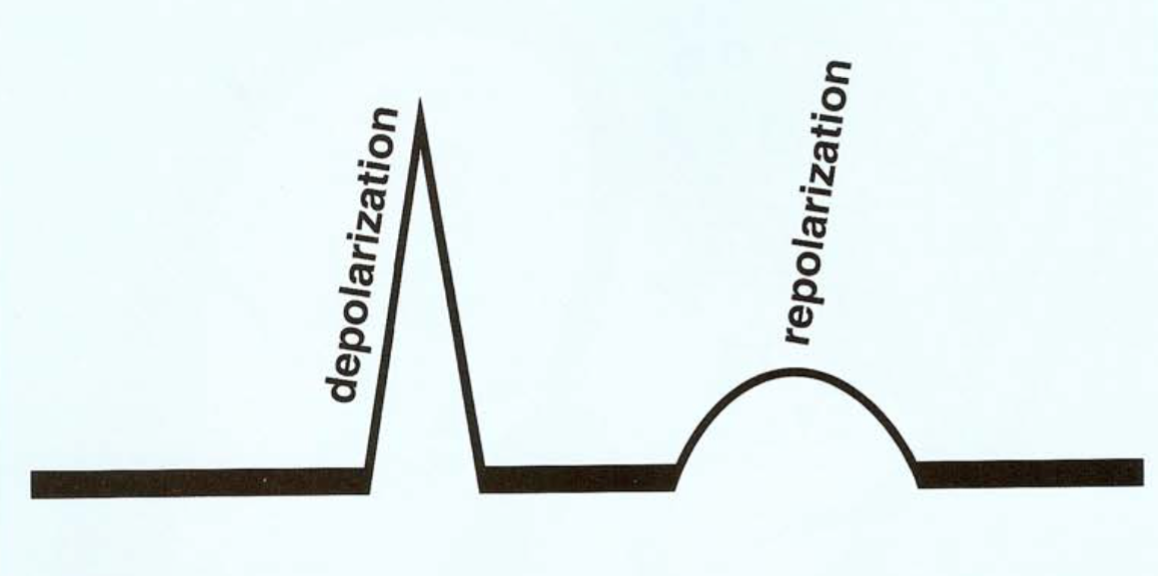
Electrocardiocardiograms can be difficult to tackle and I know that this is a topic that I repeatedly visit, both for simple things like delineating PVCs (premature ventricular contractions) from PACs (premature atrial contractions) and denoting what defines a second degree type 1 versus a second degree type 2 heart block. But there’s so much more than just that - there’s right and left bundle branch blocks, right and left ventricular hypertrophy, ischemia, infarction, axis deviation, atrial hypertrophy, etc. While this is a very limited approach to EKGs and while there is still much to learn about them, this is a great introduction to EKGs for any student, whether you are pre-med, pre-PA, pre-NP, pre-nursing, or pre any other health profession. At the end of the review are a few helpful questions provided by TrueLearn you can use after you’ve studied the review, which offer you some insight into the type of questions and degree of exam preparation offered. I hope that you find them as useful as I have. Good luck and let me know if there are any errors or questions!


Electrocardiogram (ECG): records the electrical activity of the heart and information about the heart’s function and structure
Screen Shot 2016-06-20 at 9.22.18 PM.png

Tuesday, May 31, 2016

Pancreatitis and Pancreatic Cancer

Pancreatitis and Pancreatic Cancer
I can’t even stress to you how frequently PA students are tested over pancreatitis (acute and chronic) and pancreatic cancer. It seems to be one of those vague presentations that test writers take advantage of by placing in distractors (answers that seem right, but are in fact incorrect). This is meant to be a short, but hopefully helpful review of each of them, so that you are better prepared to tackle questions on these topics regardless of if they’re your in house exams during didactic, rotation exams, the PACKRAT, the PANCE, or the PANRE. I hope this helps you regardless of which avenue you find it useful. Good luck and make sure to check out TrueLearn’s free sample questions below! I’ll say, I loved their gastroenterology section the most. The vignettes were on point and difficulty wise - they were spot on with the rotation exams and PANCE-style questions.


Acute and Chronic Pancreatitis

Monday, April 18, 2016

Seizures, Headaches, and Migraines

Seizures, Headaches, and Migraines
Updated: 04/18/2016


Seizures, headaches and migraines are some of the most commonly occurring questions on the PACKRAT, rotation exams, PANCE, and PANRE. Since they also occur commonly in practice, you’ll definitely want to cover these topics thoroughly. Knowing the subtleties between each and the questions to ask is important not only for your understanding, but so you can treat the patient accordingly with the most appropriate therapy.


While Neurology only makes up 6% of the PANCE, knowing topics like this well can mean the difference between passing and not passing. As I have stated before, one of the best ways to prepare for your exams is through quality question banks and study guides. TrueLearn has introduced an incredible opportunity to work with the PA-student and PA community to help us excel in our didactic education and clinicals, and on our boards. See below for our second post discussing Seizure Disorders and Headaches and Migraines.


Remember from last month that TrueLearn’s SmartBanks include specialized medical content crafted to mirror rotation exams, the PACKRAT, the PANCE and the PANRE. This means that the best test writers have come together to write questions that not only get your juices flowing, but challenge you to think critically - the most important characteristic of great PAs.


Visit TrueLearn.com/Physician-Assistant/ today to learn more about their physician assistant products.  


Disclosure: I am not an employee of TrueLearn.
Seizure Disorders - sudden abnormal discharge of electrical activity
  • Epilepsy - syndrome of recurrent, idiopathic seizures
  • In seizures, duration of unconsciousness tends to be longer than in syncope (momentary)
  • In syncope, bladder control is retained, but lost in seizures
  • Causes: four Ms and four Is
    • Metabolic and electrolyte disturbances - hyponatremia, water intoxication, hypoglycemia and hyperglycemia, hypocalcemia, uremia, thyroid storm, hyperthermia
    • Mass lesions - brain mets, primary brain tumors, hemorrhage
    • Missing drugs
      • Non-compliance with anticonvulsants (most common reason)
      • Acute withdrawal from alcohol, benzos, barbituates
    • Miscellaneous
      • Pseudoseizures - psychiatric in origin
      • Eclampsia
      • Hypertensive encephalopathy
    • Intoxication - cocaine, lithium
    • Infection - septic shock, bacterial or viral meningitis, brain abscess
    • Ischemia - stroke, TIA (common in elderly)
    • Increased ICP due to trauma
  • Diagnosis
    • If known epileptic → check anticonvulsant levels
    • If first seizure
      • CBC, CMP (LFTs), blood glucose, renal function tests, serum calcium, urinalysis
      • EEG: most helpful diagnostic test, abnormal pattern is not diagnostic alone
      • CT scan of head: r/o structural lesions
      • MRI of brain with and without gadolinium: more sensitive than CT for structural changes
      • LP/blood cultures if febrile
      • Pregnancy test - before initiating anticonvulsants!!!
  • Treatment
    • ABCs first, secure airway and roll patient to side
    • Known epileptics
      • Check for non-compliance of anticonvulsant, check levels
      • If persistent with monotherapy, increase dose of first anticonvulsant until signs of toxicity appear → add second drug if seizures uncontrolled
      • If controlled → continue regimen x 2 years, then taper
    • First seizure
      • EEG with neurology consult
      • Anticonvulsant therapy
      • If normal EEG, recurrence low (15%) compared to abnormal EEG (41%)
      • Do not treat patients with single seizure - start antiepileptics if EEG abnormal, MRI abnormal or status epilepticus

Tuesday, March 15, 2016

TrueLearn's SmartBanks

Introducing TrueLearn
Updated: 03/17/2016
At the PAEA Summit I recently attended in Washington D.C. I learned that PA students and practicing PAs should understand that even once we graduate, we will always be a student. Continuous learning is an expectation not just of our peers or NCCPA, but of our employers as well, and our colleagues (physicians and NPs). Collectively, we must work to ensure we are practicing at the top of our career, implementing the best practices and presenting the most up-to-date information to our patients. One colleague put it plainly, “either be at the table, or be on it.” This can be interpreted in many ways, but I believe that regular review of content keeps us competitive.


Over the next 3 months, I will be selecting topics that are most commonly tested by the NCCPA and PAEA for exam preparation. TrueLearn, which provides next generation question banks (called SmartBanks), will provide free practice questions on these topics to provide insight into their test preparation expertise. One of the best ways to prepare for your exams is through quality question banks. TrueLearn has introduced an incredible opportunity to work with the PA-student and PA community to help us excel in our didactic education and clinicals, and on our boards. Moving forward, I am pleased to announce TrueLearn to the table of exam preparation for PAs from the start of your education. See below for our first post discussing Heart Murmurs. This topic is important as Cardiology makes up 16% of the PANCE and PANRE exams.


SmartBanks, brought to you by TrueLearn, the nation’s most trusted test preparation, provide the highest level of test readiness available today.Their products have served up over 39 million practice questions in 2015 alone, achieving an 11% score improvement after using their SmartBanks. TrueLearn’s SmartBanks have been utilized for USMLE, COMLEX, and specialty board exams in general surgery, anesthesiology, emergency medicine, family medicine, pediatrics, OB/GYN, internal medicine, and psychiatry. These exams are written by the nation's leading specialists and are used by most medical students and residents in preparation for shelf (clinicals) and board exams.


TrueLearn’s SmartBanks include specialized medical content crafted to mirror rotation exams, the PACKRAT, the PANCE and the PANRE. Why stop there? Use these exams to help you prepare for Certificates of Added Qualification (CAQ) - the limits are endless!


Visit TrueLearn.com/Physician-Assistant/ today to learn more about their physician assistant products.