Showing posts with label cardiology. Show all posts

Friday, July 8, 2016

Introduction to EKGs for Physician Assistants

Intro to Electrocardiograms for Physician Assistants
Updated: 07/08/2016


Electrocardiocardiograms can be difficult to tackle and I know that this is a topic that I repeatedly visit, both for simple things like delineating PVCs (premature ventricular contractions) from PACs (premature atrial contractions) and denoting what defines a second degree type 1 versus a second degree type 2 heart block. But there’s so much more than just that - there’s right and left bundle branch blocks, right and left ventricular hypertrophy, ischemia, infarction, axis deviation, atrial hypertrophy, etc. While this is a very limited approach to EKGs and while there is still much to learn about them, this is a great introduction to EKGs for any student, whether you are pre-med, pre-PA, pre-NP, pre-nursing, or pre any other health profession. At the end of the review are a few helpful questions provided by TrueLearn you can use after you’ve studied the review, which offer you some insight into the type of questions and degree of exam preparation offered. I hope that you find them as useful as I have. Good luck and let me know if there are any errors or questions!


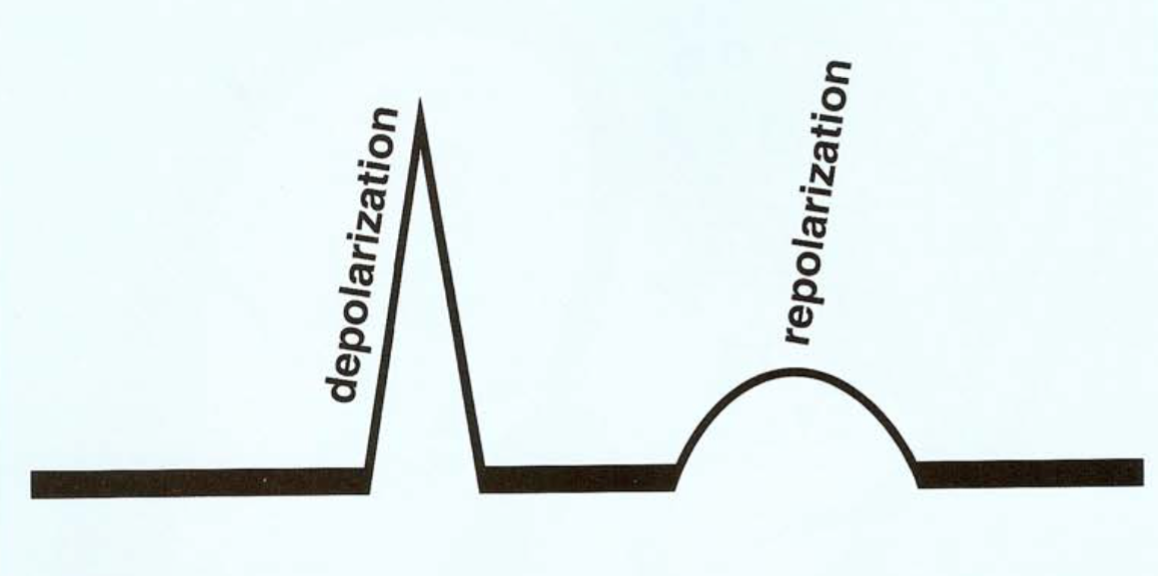
Electrocardiogram (ECG): records the electrical activity of the heart and information about the heart’s function and structure
Screen Shot 2016-06-20 at 9.22.18 PM.png

Tuesday, March 15, 2016

TrueLearn's SmartBanks

Introducing TrueLearn
Updated: 03/17/2016
At the PAEA Summit I recently attended in Washington D.C. I learned that PA students and practicing PAs should understand that even once we graduate, we will always be a student. Continuous learning is an expectation not just of our peers or NCCPA, but of our employers as well, and our colleagues (physicians and NPs). Collectively, we must work to ensure we are practicing at the top of our career, implementing the best practices and presenting the most up-to-date information to our patients. One colleague put it plainly, “either be at the table, or be on it.” This can be interpreted in many ways, but I believe that regular review of content keeps us competitive.


Over the next 3 months, I will be selecting topics that are most commonly tested by the NCCPA and PAEA for exam preparation. TrueLearn, which provides next generation question banks (called SmartBanks), will provide free practice questions on these topics to provide insight into their test preparation expertise. One of the best ways to prepare for your exams is through quality question banks. TrueLearn has introduced an incredible opportunity to work with the PA-student and PA community to help us excel in our didactic education and clinicals, and on our boards. Moving forward, I am pleased to announce TrueLearn to the table of exam preparation for PAs from the start of your education. See below for our first post discussing Heart Murmurs. This topic is important as Cardiology makes up 16% of the PANCE and PANRE exams.


SmartBanks, brought to you by TrueLearn, the nation’s most trusted test preparation, provide the highest level of test readiness available today.Their products have served up over 39 million practice questions in 2015 alone, achieving an 11% score improvement after using their SmartBanks. TrueLearn’s SmartBanks have been utilized for USMLE, COMLEX, and specialty board exams in general surgery, anesthesiology, emergency medicine, family medicine, pediatrics, OB/GYN, internal medicine, and psychiatry. These exams are written by the nation's leading specialists and are used by most medical students and residents in preparation for shelf (clinicals) and board exams.


TrueLearn’s SmartBanks include specialized medical content crafted to mirror rotation exams, the PACKRAT, the PANCE and the PANRE. Why stop there? Use these exams to help you prepare for Certificates of Added Qualification (CAQ) - the limits are endless!


Visit TrueLearn.com/Physician-Assistant/ today to learn more about their physician assistant products.  

Sunday, October 19, 2014

Cardiology List of Most Commons for Physician Assistant Students


Dear Readers,

Below are the most commons in cardiology that I’ve put together from this block. I’m sure once I enter rotations I will be adding many more. Can I just say that one of my biggest pet-peeves right now is the incorrect pronunciation of medical terms? For example, angina. This word has been produced in two ways by various professors, but there must be a correct way to pronounce it, so naturally, I looked it up. “An-jen-uh” is the correct pronunciation, while “an-jine-ah” is colloquially used, but incorrect.

Cardiology Most Commons
  • Most common pathologic process of the pericardium - Pericarditis
    • Most common etiology of Acute Pericarditis - coxsackievirus A and B
  • Most common cause of death in the U.S. - Coronary Artery Disease (CAD)
    • Coronary microcirculation disease more common in women - this is why CAD affects more women than men annually
    • Exercise electrocardiography less accurate in women
    • More women die each year of CAD
  • Most common cause of sudden cardiac death: ventricular fibrillation
  • Most common cause of sudden cardiac death in young athletes: hypertrophic obstructive cardiomyopathy (HOCM)
  • Hypertension
    • More common in women as age increases
    • More common in men in young and middle aged people
    • More common in African Americans and lower socioeconomic groups
      • African Americans develop at earlier age compared to other races
    • Secondary HTN - more common in children
  • White coat HTN - affects more treated women than men
  • HTN is the SECOND most common cause of CKD