Showing posts with label PA. Show all posts

Wednesday, September 19, 2018

The PA Rotation Exam Review

As many of you might have noticed I have been very absent from social media and from my blog. I've taken this temporary 2.5-3 year absence working on the most challenging and taxing project I never thought I'd complete. After many long nights of creating content, revision after revision, sourcing, and final-final-final edits, it is now complete. It's release date was November 27, 2018. 

Below is the front cover for you all. I figured that my biggest fans, my readers, family, and friends, deserve to know first! If you have any questions about the book, I'd love to answer them below. Hopefully this means that I can get back to my blog and update many of my old posts and answer some of the long-overdue questions in the comments section. 

Thank you all for your support and patience. So surreal seeing your name published as the primary author on a text. 

Available for purchase at the following sites:
Amazon

Wolters Kluwer  (use discount code for 20% off: WJF074EE)
Target
Barnes & Noble Thanks everyone 

Paul Gonzales, PA-C


Tuesday, October 11, 2016

Heart Murmurs and Valvular Heart Disease

Heart Murmurs/Valvular Heart Disease*
  • Most common causes of mitral/aortic valve disorders are congenital defects; other causes include rheumatic heart disease, connective tissue disorders, infection, sensile conditions
  • Most common presenting symptoms: dyspnea, fatigue, decreased exercise tolerance
    • Other: Cough, rales, paroxysmal nocturnal dyspnea or hemoptysis, hoarseness
    • Physical exam - heart murmur +/- palpable thrill  
  • Diagnostic Studies
    • EKG - not useful for specific diagnosis → shows chamber hypertrophy
    • CXR
      • Aortic → left sided atrial enlargement, ventricular hypertrophy
      • Mitral → atrial enlargement only
    • Echo (transesophageal) and cardiac cath → definitive
  • Treatment
    • Surgical repair or replacement of defective valve
    • Good exercise tolerance → diuretics and vasodilators for pulmonary congestion and digoxin or BB for dysrhythmias
    • Anticoagulant therapy for thromboemboli prophylaxis
    • Antibiotics to prevent endocarditis and recurrent rheumatic fever


Mitral Valve Prolapse

Regurgitant flow across mitral valve
Decreased left ventricular volume results in earlier prolapse and click heard earlier in systole, closer to S1

Increased left ventricular volume results in delayed prolapse, click heard later in systole

Thin females with minor chest wall deformities

Associated: Ehlers-Danlos, Marfan Syndrome, Mitral Regurgitation
1. Mid-systolic click
2. Followed by a mid-to-late systolic murmur (mitral regurgitation)
3. Loud S2

“Click” is caused by prolapse of leaflets into left atrium and tensing of mitral valve apparatus
1. Maneuvers that increase left ventricular end diastolic volume (preload)/worsen: seated/standing → squatting
2. Maneuvers causing delay in prolapse: handgrip, standing from seated position, valsalva


Health Maintenance
1. Leads to mitral regurgitation
2. Predisposed to infective endocarditis
3. ADA no longer recommends prophylactic antibiotics for MVP

Wednesday, August 10, 2016

Antibiotics for PAs - Part I

Antibiotics for Physician Assistants - Part I
Updated: 08/07/2016
  • Empiric therapy is defined as the initiation of treatment prior to firm diagnosis, and knowing the specific organism causing the infection
    • Started only after cultures have been obtained
    • Targets likely pathogens and must use local antibiogram
  • Broad spectrum means covering both gram positive and gram negative bacteria
  • Pharmacokinetics: what the body does to a drug
    • Absorption: described in terms of bioavailability (F)
      • 100% bioavailable drugs (PO = IV): Linezolid, Fluoroquinolones, Tetracyclines, Azithromycin, Metronidazole, Trimethoprim/Sulfamethoxazole (Bactrim), Rifampin
    • Distribution: affected by protein binding, blood flow, molecular size, lipophilicity, inflammation, and fluid status
    • Metabolism: occurs primarily in the liver via multiple mechanisms
      • Phase I: oxidation/reduction (CYP 450), hydrolysis
      • Phase II: glucuronidation, sulfonation, methylation, acetylation, glutathione
    • Elimination: primarily renal (glomerular filtration and tubular secretion)
      • Most antibiotics require dose adjustment for creatinine clearance (CrCl) <50 mL/min
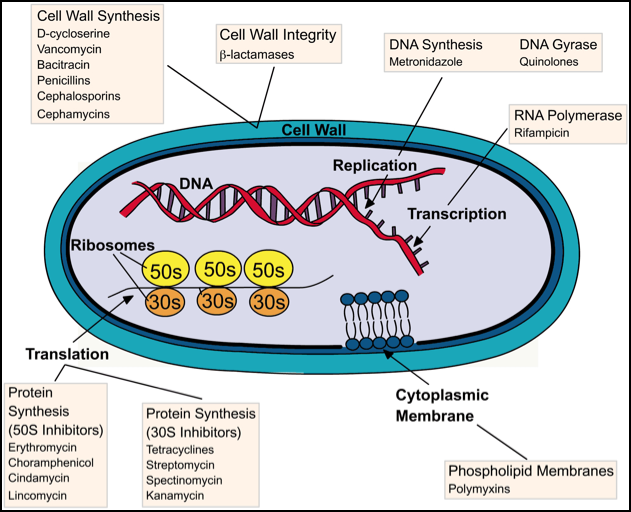
Screen Shot 2016-08-07 at 3.16.10 PM.png
Cell Wall Synthesis Inhibitors

Tuesday, March 29, 2016

Introduction to Medically Important Bacteria

Introduction to Medically Important Bacteria
Updated: 08/07/2016
Types of Therapy
  • Prophylactic Therapy – treatment initiated to prevent an infection that has not yet developed
    • Ex. Antibiotic “prophy” to prevent opportunistic bacterial infections
    • Ex. Antibiotics while on a trip to Mexico
    • Ex. Antibiotics before surgery or dental procedures to prevent bacterial endocarditis
  • Empiric Therapy
    • Empiric – relies solely on observation or practical experience.
    • Therapy initiated to treat serious infections until test results are available; or therapy for minor infections (URI’s, UTI’s) because causative organisms are predictable and their susceptibility to available antibiotics is known
  • Definitive Therapy
    • Start broad spectrum antibiotics before the culture and sensitivity results are reported. When they become reported, you know what will kill the bug in vitro and can tailor the therapy making it less broad and more definitive.
    • The hospital antibiogram can assist with empiric or definitive therapies.
  • Antibiogram
    • The cumulative results of hospital performed bacterial susceptibility testing organized into a summary table which may be used by clinicians, pharmacists, infection control personnel and microbiologists as a reference guide to community or hospital-specific resistance patterns.

Monday, December 28, 2015

Fifth Semester at UT Southwestern

Fifth Semester at UTSW
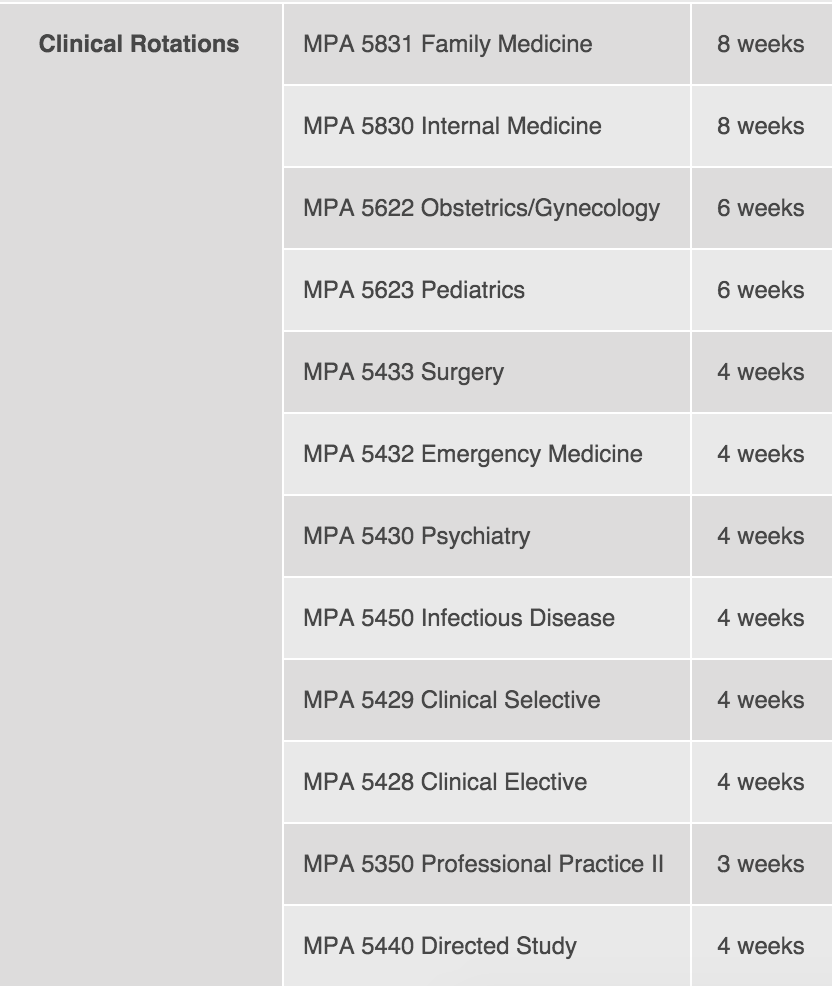
Below is a schedule taken from our program website detailing the clinical rotation schedule. Each student’s rotations are already set up for them (a huge plus), as I learned at the PAEA conference this year that not all PA programs do this. Some programs require that you setup your own rotations. Additionally, I appreciated an increased level of security that our rotations were quality - something not all programs ensure. Our rotations have been vetted before, dropping sites and preceptors who do not meet a high enough standard for our students. Our clinical coordinators have also done a great job of ensuring preceptors provide feedback to our students and that we get the most experience on each rotation, never being left in the shadows.


Screen Shot 2015-12-28 at 7.26.32 PM.png

Monday, August 3, 2015

Fourth Semester at UT Southwestern

Fourth Semester at UT Southwestern
Updated: 08/03/2015
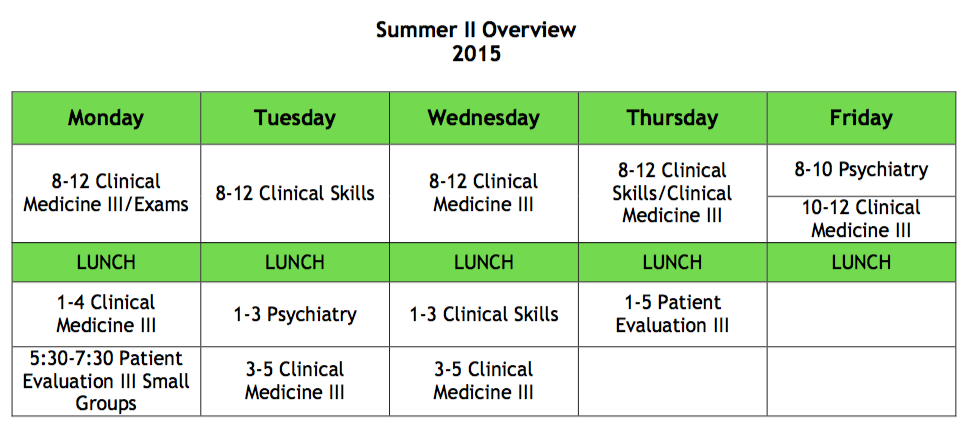
Screen Shot 2015-07-27 at 8.57.54 PM.png


Finishing didactic is probably one of the most bittersweet and alleviating feelings you have ever felt in your life; there really isn’t another comparison, unless passing the PANCE feels the same way or better. Although this semester may have had a less demanding class-schedule and less courses than previous semesters, there was definitely enough work to be done. Between SOAP write-ups, seeing patients in the hospital or in a controlled (OSCE) setting, or preparing for exams, there was never a dull moment. This semester felt like one of the most rewarding because we finished our didactic education - now it is time to review everything, hammering the material in, and ensuring we are competent providers when we graduate.

Wednesday, July 22, 2015

Pediatrics List of Most Commons for Physician Assistant Students

Most Commons in Pediatrics
  • Most Common Congenital Heart Lesions
    • Left-to-Right Shunts (Breathless)
      • VSD (Ventricular septal defect) - 30%
    • Right-to-Left Shunt (Blue)
    • Common Mixing (Breathless and blue)
      • Atrioventricular septal defect (complete) - 2%
  • Coarctation of the Aorta - most common site is ligamentum arteriosum
    • More common in males than females (3:1)
    • Pathognomonic signs: rib notching on CXR, “three sign” on CTA

Friday, May 1, 2015

Third Semester at UT Southwestern

Third Semester at UT Southwestern
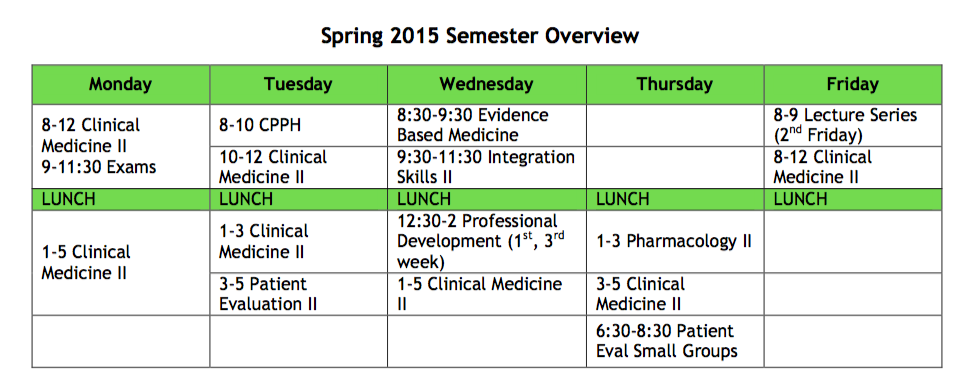
Screen Shot 2015-05-01 at 1.21.36 PM.png


They say that the further you move along in PA school, the tougher it gets, and “they” are right. In light of the fact that it is only our third semester, this has been the busiest one, for sure. It feels like we had just started the GI block, but before long we had completed neurology, orthopaedics, endocrine, and nephrology/urology. Alas, we received information about our clinical rotations beginning in the fall about 2-3 weeks ago and I am ecstatic. Not only that, but I now have my very own little. If you were unaware, our program has the big/little system. I am able to pass down helpful information and books to my little to help her navigate through PA school.

Thursday, March 26, 2015

Orthopaedics List of Most Commons for Physician Assistant Students

6192359_orig.png
Most Commons in Orthopaedics
  • Compartment Syndrome
    • Most commonly occurs in lower leg following tibia fractures or crash injuries
  • Anterior Cruciate Ligament (ACL) Injury - most commonly injured knee ligament
  • Osgood Schlatter’s Syndrome - most common in adolescents that are overactive (too many sports)
  • Patellofemoral Pain: most commonly caused by anterior knee pain syndrome, chondromalacia patella, patellofemoral osteoarthritis
  • Fibromyalgia - most common cause of chronic, widespread pain in the US

Friday, March 6, 2015

Why I Chose UT Southwestern's Physician Assistant (PA) Program

Why Did You Choose UT Southwestern’s PA Program?
This is a commonly asked question. I get this question about once a week from my blog or in-person when I give campus tours. It is a very difficult question to answer. Mainly because it's difficult to answer without making one PA program shine and all of the others look inferior. There are plenty of wonderful PA programs available, so I won’t spend any time criticizing them. Instead, I will say a few things about the program I did choose. These are in no particular order.


  1. Excellent rotation sites: When I was looking into UTSW, they were building 2 new major hospitals within walking distance of the university (William P. Clements and Parkland Memorial Hospital). Those hospitals are now complete and are some of the largest in the southwest region, they offer state of the art facilities, and will include many new rotation sites for our program allowing it to grow in size. In addition, our program phases out bad rotations if they find any not up to high standards (which does occasionally happen) and they find new rotations for students if that does happen.

Thursday, February 26, 2015

Neurology List of Most Commons for Physician Assistant Students

Most Commons in Neurology
  • Tension Headache - most common type of headache
    • Episodic Tension-Type Headache - most common headache subtype (<15 days monthly)
  • Migraine - most common recurrent headache disorder
  • Medication Overuse Headache (Analgesic Rebound) - most common cause of migraine-like and “mixed” headaches that occur > 15 days per month
  • Epilepsy - most common in childhood due to perinatal injury, infection and genetic factors and old age due to stroke, tumors, or dementia
  • Seizures
    • Most common toxic causes of seizures: drugs, alcohol, and medications
    • Most common metabolic causes of seizures: hypocalcemia, hypoglycemia, hyponatremia, hypoxia

Saturday, February 14, 2015

From International Student to Physician Assistant

From International Student to Physician Assistant
Updated: 07/08/2016
You may be an international medical graduate (IMG), a caribbean medical student, or a student from a foreign country (outside the United States) wanting to attend physician assistant (PA) school. While it may seem daunting at first, do not be frightened by the lengthy application process or by the worrisome anecdotal stories you may read about online.

You will need to prepare your materials before throwing an application together. Many international students and international medical graduates see medical school residency matching as a barrier to becoming a licensed provider in the United States, which is why they choose to become physician assistants.

Friday, January 30, 2015

Gastroenterology List of Most Commons for Physician Assistant Students

Esophageal adenocarcinoma is the fastest growing cancer in the United States. In total, it affects about 1.5 million people per year worldwide and 38,000 in the US alone. There has been a 6-fold increase in the last 3 decades, accounting for 60% of esophageal cancers. This is one puppy you don’t want to mess with; don’t even get me started on colorectal cancer!

Gastroenterology accounts for 10% of the PANCE, so make sure you pay attention during this part of your didactic phase! Knowing that, you had better take a step into gastroenterology with your thinking cap on ready to learn about new disease and therapy that can affect the way you provide care everyday.

Most Commons in Gastroenterology
  • Heartburn (pyrosis) - most common symptom of esophageal disease
  • GERD (Gastroesophageal reflux disease) - most common disorder of the esophagus
  • Ulcerative Colitis - most commonly affects young adults in 2nd and 3rd decade of life, but 2nd peak in 7th decade
    • Most common in N. America, England, N. Europe, and Australia
    • More common in industrialized countries
    • More common in higher socioeconomic status
    • Important: Ulcerative colitis increases the risk of colorectal cancer
  • Crohn’s Disease - most common between 15-30 years of age, though can present at any age
    • More common in industrialized countries
    • More common in higher economic status
    • Most common in N. America, England, N. Europe, and Australia
    • Skip areas common: The most common distribution pattern of Crohn’s disease is ileocecal, which involves the distal portion of the small intestine (terminal ileum) and the proximal large bowel (40% of patients)
  • Most common skin lesions in IBD: pyoderma gangrenosum and erythema nodosum

Sunday, January 25, 2015

Pi Alpha Honor Society

Pi Alpha Honor Society
“Scholarship, Service, Leadership”


index.php.jpeg
Pi Alpha [PAEA, 2015]. 


A membership motion at the October 2003 PAEA (formerly APAP) Education Forum in Phoenix, Arizona is what began the first national honor society for physician assistants. Now known as Pi Alpha, the Society was originally created to recognize PAs and promote “significant academic achievement, leadership, research, and community/professional service; and the encouragement of a high standard of character and conduct among both physician assistant students and graduates.” In only it’s second year in existence, Pi Alpha had 50 chapters established and nearly 300 students, faculty, alumni, and honorary members inducted. Today, there are 87 chapters registered across 33 states, including the District of Columbia. You can click the link to find out if your PA program has an active chapter.


“We established a Pi Alpha chapter because it is not strictly based on academic performance like Alpha Eta or Who’s Who. It recognizes the well rounded student who is committed to serving the community and the program.”
— Patrick Auth, PhD, PA-C
Director, Drexel University Hahnemann PA Program


Requirements for Chapter Membership: