Showing posts with label pre-physician assistant. Show all posts

Thursday, June 9, 2016

Introduction to Radiology for Physician Assistants

Introduction to Radiology for Physician Assistants
Updated: 06/09/2016
In this post, I hope to introduce you all to the differences between imaging modalities, including indications and contraindications. My goal is also to provide a basic understanding of the concepts surrounding density and normal x-ray findings. Future posts will investigate the findings for pneumonia, pneumothoraces, effusions, atelectasis, fractures/dislocations, arthritis, intracranial, GI and hepatic pathology, bowel, lines/tubes, and heart disease.

Conventional Radiography (Plain Films)
  • Images produced through use of ionizing radiation
  • No contrast material (barium or iodine)
    • Why it’s important: Large doses of radiation can produce cell mutations leading to cancer or anomalies. Even low levels of radiation are teratogenic (avoid in pregnancy).
  • Relatively inexpensive, obtained easily (portable, mobile), most widely used
  • Common uses: chest x-ray (CXR), abdominal x-ray, and for fractures or arthritis


Computed Tomography (CT or CAT Scans)
  • Uses a gantry with a rotating x-ray beam and multiple detectors with sophisticated algorithms to process the data
  • Expensive equipment, lots of space, and high computer processing power required

Friday, June 3, 2016

The Applicant’s Manual of Physician Assistant Programs

The Applicant’s Manual of Physician Assistant Programs
Updated: 06/03/2016
I met Mark Volpe in November 2015 at a the Inaugural Future Educator Fellowship (FEF) PAEA Conference. Mark is a standup guy and his dedication to aide pre-PA students after entering the workforce really speaks to his character and motivation. Mark is also the coauthor of a book inspired to help pre-PA students easily navigate the pre-application process in hopes to narrowing the search for a PA-program-home.
The Applicant’s Manual of Physician Assistant Programs provides tips and tricks for navigating the application process and gives students useful and comprehensive information about every single accredited PA program in the US. This not only saves the student time in the exhausting and taxing search through PA program websites, but also provides the most important information about each school in a single comprehensive text to use at your own disposal. This manual easily helps to narrow down your list of potential PA programs and gain a competitive edge - the first step to applying to PA school.

Key features include:
1. An introduction section which reviews the basics of the PA school application and admissions process

Monday, August 3, 2015

Fourth Semester at UT Southwestern

Fourth Semester at UT Southwestern
Updated: 08/03/2015
Screen Shot 2015-07-27 at 8.57.54 PM.png


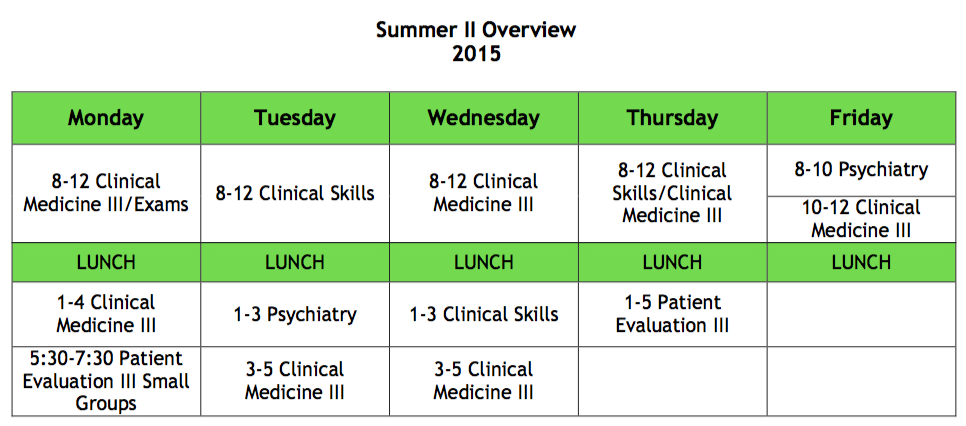
Finishing didactic is probably one of the most bittersweet and alleviating feelings you have ever felt in your life; there really isn’t another comparison, unless passing the PANCE feels the same way or better. Although this semester may have had a less demanding class-schedule and less courses than previous semesters, there was definitely enough work to be done. Between SOAP write-ups, seeing patients in the hospital or in a controlled (OSCE) setting, or preparing for exams, there was never a dull moment. This semester felt like one of the most rewarding because we finished our didactic education - now it is time to review everything, hammering the material in, and ensuring we are competent providers when we graduate.

Tuesday, June 16, 2015

Practicing EKGs for Physician Assistants

Practicing EKGs for Physician Assistants
I get a lot of requests about EKG/ECG courses in preparation for PA school or the PANCE and numerous people searching for EKG courses are re-routed to my blog, so I put a list of them together for your convenience. I hope that pre-PA students, PA-S, and PA-C are all able to utilize these resources and find one convenient, affordable, and suitable to their situation. I’ve tried to list costs and details about some of them, but they’re all very different and some of them are so new they don’t have reviews yet. They range from basic to intermediate and advanced ECG interpretation. Later, I talk about in-person courses and even free resources. There are also books that you can purchase to help you study, which is how I studied EKGs and I found it most helpful to practice strips - lots and lots of them. If you’re feeling ambitious or you work in cardiology, you might consider becoming certified in EKGs, and I provide information about that below as well. Good luck in your studies to becoming a better PA and understanding these rhythms!

Friday, May 1, 2015

Third Semester at UT Southwestern

Third Semester at UT Southwestern
Screen Shot 2015-05-01 at 1.21.36 PM.png


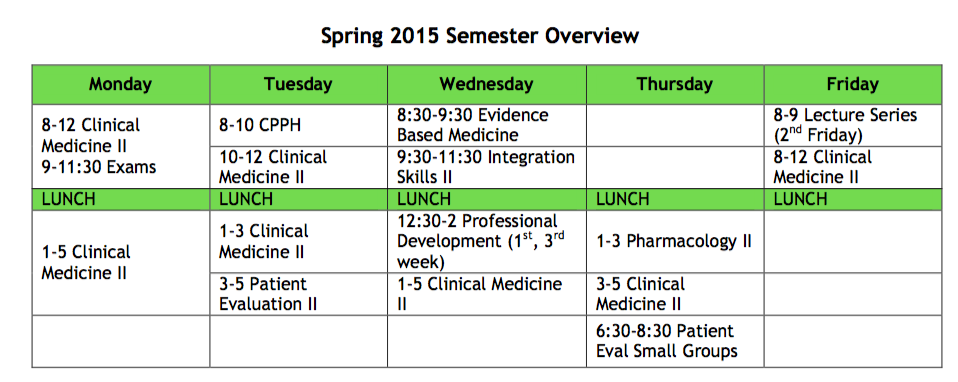
They say that the further you move along in PA school, the tougher it gets, and “they” are right. In light of the fact that it is only our third semester, this has been the busiest one, for sure. It feels like we had just started the GI block, but before long we had completed neurology, orthopaedics, endocrine, and nephrology/urology. Alas, we received information about our clinical rotations beginning in the fall about 2-3 weeks ago and I am ecstatic. Not only that, but I now have my very own little. If you were unaware, our program has the big/little system. I am able to pass down helpful information and books to my little to help her navigate through PA school.

Sunday, January 25, 2015

Pi Alpha Honor Society

Pi Alpha Honor Society
“Scholarship, Service, Leadership”


index.php.jpeg
Pi Alpha [PAEA, 2015]. 


A membership motion at the October 2003 PAEA (formerly APAP) Education Forum in Phoenix, Arizona is what began the first national honor society for physician assistants. Now known as Pi Alpha, the Society was originally created to recognize PAs and promote “significant academic achievement, leadership, research, and community/professional service; and the encouragement of a high standard of character and conduct among both physician assistant students and graduates.” In only it’s second year in existence, Pi Alpha had 50 chapters established and nearly 300 students, faculty, alumni, and honorary members inducted. Today, there are 87 chapters registered across 33 states, including the District of Columbia. You can click the link to find out if your PA program has an active chapter.


“We established a Pi Alpha chapter because it is not strictly based on academic performance like Alpha Eta or Who’s Who. It recognizes the well rounded student who is committed to serving the community and the program.”
— Patrick Auth, PhD, PA-C
Director, Drexel University Hahnemann PA Program


Requirements for Chapter Membership:

Tuesday, January 6, 2015

The 8 Best Physician Assistant Social Media Sites You Should Be Following

The 8 Best Physician Assistant Social Media Sites You Should Be Following


If you thought Facebook was cool, wait until you see what these sites have to offer. No seriously, they give you so much more than what your sister’s boyfriend’s cousin’s brother ate for dinner last Tuesday. Instead of checking Instagram every 5 seconds, why not check Twitter and scroll through these accounts to see if there are any new updates in our profession or any scholarship deadlines coming up? Educate yourself, stay informed, and improve your life one step at a time, starting with your mobile device.


  1. PAEA Networker. A personal favorite of mine. This is by far one of the best sites available. Whoever updates this site is a PA guru. Throughout the year I get lots of the content for my blog including scholarships, fellowships, residencies, new programs, new PA advancements, PA legislation, CASPA news, end of rotation, PACKRAT, and PANCE news, new PA opportunities in education, and much more. The list is really endless on this site. It has really become a Facebook for me. I check it pretty regularly for updates. Sad part is they don’t update it as fast as the pug vines are popping up on my Timeline.

Monday, December 8, 2014

Am I A Competitive Physician Assistant (PA) Applicant?

What Makes a Competitive PA Applicant
Last Updated: 08/03/2015


Am I a competitive PA applicant?” is a question thousands upon thousands of applicants ask themselves each year while applying. It is a question every admissions committee will be asked during a prospective session, and a question all PA coaches can be expected to be asked by their students. There is a lot to learn from our peers, including organizations like Physician Assistant Education Association (PAEA), who has recently re-instated the Matriculating Student Survey (MSS) data collected from first year PA students to gauge their academic background, application and admission experiences, including a multitude of other characteristics I will cover shortly. The surveys were conducted in September of 2013. If we do the math, this was PA students who matriculated (entered) PA school in 2013, so these are students that are one year above my current PA class.

Saturday, December 6, 2014

Second Semester at UT Southwestern

First off, thank you all for reading. I started my blog about one year ago with the intention of keeping myself updated about current events in the PA profession as it is rapidly changing with our developing healthcare system. While I have yet to write many articles that have needed writing since the beginning of this semester, I plan to write a lot while I have a one month break this winter. Thank you for reading my blog and for helping me reach 200k views! -Paul

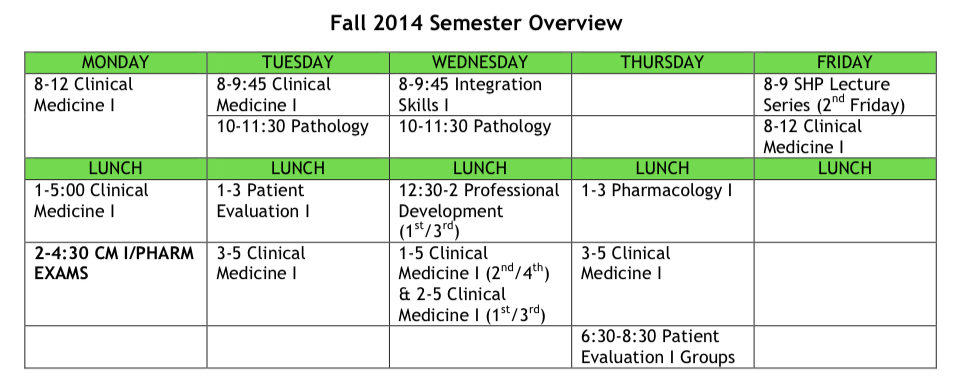
We finally completed our second semester (Fall I) at UT Southwestern. It was a doozey. Much harder than I had expected. It made summer semester seem like a breeze!


Screen Shot 2014-12-05 at 3.48.08 PM.png

Friday, October 24, 2014

PA School Tuition Decreases!

Hallelujer, praise da Lort! (I hope you've seen Madea

Our professors recently went to Philly to the PAEA Conference where some very interesting information was presented. For those applying this cycle or next, take a look at this:

Data revealed from the 29th Annual Report:

  1. If you apply to one PA program - you have a 25% chance of getting in
  2. If you apply to 12 programs (or more) - you have a 49% chance of getting acceptance
    1. No additional benefit for more than 12 
  3. As age of applicants increases, GPA was lower 
  4. With each cycle, GPAs are increasing
    1. In 2007 (avg: 3.39), while in 2011 (avg: 3.49) - matriculants (people who got accepted)
    2. In 2007 (avg: 3.12), while in 2011 (avg: 3.16) - non-matriculants (who did not get in)
  5. Health care experience decreasing steadily
    1. In 2007 (avg: 3.43 years), while in 2011 (avg: 1.88 years)
  6. Number of applicants increasing - not surprising, honestly
    1. As of September 30, 19,000 applications were submitted 
  7. 60 programs in the queue to be accredited - estimated 10,000 PA graduates by 2018
    1. There are currently 204 PA programs - this is insane! But only 177 programs participate in CASPA. 

Now the FINALE!

  1. Resident tuition at public school programs dropped 8.0% in 2013
  2. Resident tuition at private school programs dropped 2.3%
  3. Non-resident tuition at private school programs dropped 3.2% 


Sources:
http://networker.paeaonline.org
Twenty-Ninth Annual Report of Physician Assistant Educational Programs in the United States, 2012-2013


Friday, April 18, 2014

International Physician Assistants

International Physician Assistants
Updated: 08/06/2015


Whether you are a recently graduated PA, a seasoned PA looking for a fresh career outside the US border, or a pre-PA looking into international opportunities after graduation, you’ve come to the right place. In this post, you’ll find everything you’ll need from physician assistant (PA) schools in other countries to international resources for job listings, to organizations uniting international PAs! As AAPA’s 2013-2015 Strategic Plan does not include any efforts or services associated with international PA practice, it will become increasingly difficult for PAs to learn about changes developing outside the US. If you have any resources or comments to add to this posting, please leave them in the comments below and I’d be happy to include any and all changes or additions.


First, I’ll direct your attention to AAPAs “International Practice” page, which offers information about international licensure, liability coverage, transporting medical supplies, and ethical practice. They also have a FAQ and Guidelines for Working Internationally, which you might find useful. Other resources were previously available, but have been removed from the site. One example was AAPAs “Before You Go--Preparing for International Practice” which included passport information, visa information, insurance, immunizations, physician supervision, guidelines for working internationally, and much more! AAPA also used to have another resource titled International Employment and Training, where you could stay up-to-date on the most current status of employment challenges faced internationally by PAs. Write to AAPA at aapa@aapa.org and let them know if you feel materials like this are necessary and needed in the PA community.


International PA Caucuses involved in the delivery of international healthcare are:

Friday, March 28, 2014

Physician Assistant Virtual Fair

Updated: 03/22/2016

Pre-PA students! The 2016-2017 CASPA cycle is just around the corner.  Have you figured out where you are applying yet? Have you attended your schools health professions fair? If your school doesn't have one, you'll be glad to know that PAEA is hosting two physician assistant virtual fairs with CareerEco! You'll be able to meet school representatives from PA programs at colleges and universities across the United States! Best of all - it's FREE!


The dates have been selected as April 25-26! The fair will include live chat rooms and video sessions with admissions. You'll have the chance to show off your resume to admissions. 


Click here to register yourself.

Thursday, March 27, 2014

Possible ICD-10 Implementation Delay


 Possible ICD-10 Implementation Delay

Recently, there has been a stir amongst the medical community regarding the implementation of ICD-10.


This is not the first time ICD-10 has caused a stir. The United States Department of Health and Human Services (HHS) has already pushed back ICD-10 implementation once before, and H.R. bill 1701 (Cutting Costly Codes Act of 2013) is still up for vote as it was passed onto the House Subcommittee on Health and the Senate Committee on Health, Education, Labor and Pensions in April and May of 2013, respectively. According to the American Academy of Family Physicians, Dr. Jeff Cain wrote to Secretary Kathleen Sebelius in February requesting that she reconsider the deadline for implementation of ICD-10.


Cain’s concerns were as follows:
  • Lack of appropriate education - As of February 2014, 79% of providers are not ready or haven’t begun implementation yet according to MGMA
  • Expense to implement (costs between $56,639 and $226,105 according to AMA)
  • Lack of adequate end-to-end testing
  • Multiple health plans and payers is causing more expense and challenge across the country
  • CMS has only focused on testing and training within hospitals and large health system, not small or medium sized practices
  • Implementation will interrupt cash flow, putting small and medium sized practices out of business
    • This includes rural and underserved patients


Suggestions made by Cain to Sebelius include:
  • Increasing CMS funding to create more educational resources for smaller practices
  • CMS should require end-to-end readiness testing each month for one week until July 2014
    • Results should be made public and show effectiveness of the system
    • If results are not positive, delay ICD-10 implementation for at least one more year
  • Provide funds to Medicare contractors for education on the use of ICD-10 codes


Although CMS Administrator Marilyn Tavenner, M.A., has already confirmed the deadline will remain intact, legislation to patch the sustainable growth rate (SGR) for another year could potentially delay ICD-10 implementation until October 1, 2015. Currently, the 121-page bill has been crafted for vote March 27, 2014 (today) by Congress, which would also extend the current SGR fix until March 31, 2015. This extension could prevent reduced Medicare payments (24%) to providers in addition to delaying the ICD-10 implementation.


Wherever you are in learning about ICD-10, you should know that it is imperative to keep on chugging along and never count on further delays. It’s always best to be prepared for anything when it comes to your patients care and for your own sake, your own revenue! CMS has released a document containing resources to aid those having trouble with ICD-10 implementation. 


As an update --- As of April 1, 2014 --- The Senate passed the bill delaying the implementation of ICD-10 for one year until 2015! 


Sources:
http://www.aafp.org/news/practice-professional-issues/20140227icd10delayltr.html
http://cms.gov/Medicare/Coding/ICD10/Downloads/ICD10-ResourcesFlyer20130913remediated.pdf
http://medicaleconomics.modernmedicine.com/medical-economics/news/proposed-sgr-patch-includes-one-year-icd-10-delay
http://www.ihealthbeat.org/articles/2014/3/28/reaction-to-icd10-delay-mixed-ahead-of-senate-vote-on-doc-fix 
http://www.hitconsultant.net/2014/03/31/icd-10-delayed-to-2015-senate-passes-sgr-doc-fix/

Wednesday, March 26, 2014

Advice for Students Beginning Physician Assistant School

Advice and Tips for Students Beginning PA School
Updated: 08/08/2015
Everyone wants to be prepared for physician assistant school, but there isn’t a formal “way” to prepare. Every student has their own process, ideas, and opinions about what you should and should not do. Ultimately, it is your own prerogative to decide how to spend your year, month, or days before your program begins. Only you know what type of learner you are and what you don’t know or don’t remember. Keep this in mind as you read this article because you’ll find yourself over analyzing everything and getting nothing out of it.


First off, remember that everyone in PA school is just as nervous as you are. You’re not alone; this is normal. Everyone is equally freaking out that they won’t be prepared for rotations, for the PACKRAT or for the PANCE. A little bit of anxiety and apprehension is good to keep you on your feet, but too much can bring you down. Mastering physician assistant school is all about balance.


Here are a few tips from previous and current students:
  • Before PA school begins.
    • Study anatomy and physiology briefly if you haven’t taken it in a while. This is not required and I personally took an online anatomy course prior to PA school, but I didn’t feel like it helped me any. Your program was built to help you become a clinician and you have to trust them that they will. You’ll definitely learn enough anatomy and phys during PA school, so do not fret if you don’t do this.
      • Central nervous system & Peripheral nervous system
        • Cranial nerves
      • Cardiovascular system (veins and arteries)
      • Bones and muscles

Thursday, March 20, 2014

Supplemental Applications and Physician Assistant School

Supplemental Applications for Physician Assistant School
Last Updated: 08/03/2015

Supplemental applications should not reflect anything in your CASPA application and are your chance to let admissions know more about you as an applicant. Nothing should be repeated from your personal narrative. If you start to deviate from the question as the paragraph continues, you are not answering the question. Find out what you want to tell admissions because you usually only have 300-500 words to answer, although some may have higher word maximums. Supplemental questions are your last chance to speak to admissions committees so it is important that you put lots of effort into them. Below are example questions from supplemental applications. As you can see, most programs ask similar questions. While these may not be used again, it is suggested that you write specific answers to the prompts you receive from your program’s supplemental application. As you gain experience, you can use these as a guide as to what type of questions you might see when you get ready to apply. It is never too early to draft a supplemental essay or your personal narrative. Jot ideas down in your spare time while shadowing or working. Keep an idea in your mind about what you’ll be asked about in the future.  


For help with your supplemental applications, utilize resources such as The PA Platform, which provides pre-PA assessments, supplemental application reviewing, letter of recommendation reviewing, and mock interviews.

Wednesday, March 19, 2014

Letters of Recommendation & Physician Assistant School

Letters of Recommendation & Physician Assistant School
Last Updated: 08/03/2015


As a pre-PA student, you should have someone review your completed letters of recommendation to determine if they are strong enough for admission, utilizing resources such as The PA Platform, which provides pre-PA assessments, supplemental application reviewing, letter of recommendation reviewing, and mock interviews. When in doubt, ask!


Savanna Perry, PA-C, is the founder of The PA Platform and started PA school at the Medical College of Georgia in May of 2012, now known as Georgia Regents University, graduating in August of 2014.  She has assisted with multiple interviews and knows what it is like to be on both sides of the interview process. She works at a Dermatology office outside of Augusta, GA and has come to love the PA profession even more while learning all of the advantages of becoming a PA. She has always enjoyed helping other people to achieve their dreams, and that is her primary goal with her site!


Please use referral code: DoseOfPA for a special discount on The PA Platform for any service(s).


If you’re new to applying, there are many important factors that can go into a letter of recommendation (LOR) or reference. I’ll discuss a little bit about each one below.


Tips:

Tuesday, March 18, 2014

Shadowing for Physician Assistant School

Shadowing for Physician Assistant School
It’s only normal for a student to be curious about who to shadow for admission into physician assistant school. You might have questions such as the following listed below. Well, I’m here to answer them to the best of my knowledge.While some may disagree with my answers, this is just my opinion and if you wish, you can check out PhysicianAssistantForum.com for more information.


  • Is it acceptable to shadow a MD/DO or Nurse Practitioner instead of a PA?
    • Yes. While you may shadow a physician or nurse practitioner, it is recommended by many programs that you shadow a physician assistant as well. Shadowing these other providers gives you knowledge and experience of their roles in healthcare, but you should know the differences between them and a physician assistant.You can really shadow anyone in healthcare. I've heard of people shadowing physicians, nurse practitioners, paramedics, etc.
  • Do programs prefer shadowing of a physician assistant?
    • By and large, yes! At all costs, shadow a PA, even if it is for only 3-5 days.
  • What types of clinical settings are appropriate for shadowing?
    • In my own experience, the physician assistant I shadowed gave me some good advice. She suggested shadowing her in clinic and hospital (surgery) settings. Ultimately, it gave me a very broader understanding of the role of a PA in various settings, as well as learning the differences between outpatient and inpatient services. This is important for your own understanding as well and shadowing in all settings will make it easier to talk about during your interviews.
  • How long should I shadow for?

Monday, March 17, 2014

Postbaccalaureate and Master’s Programs for Physician Assistant School

Postbaccalaureate and Master’s Programs for PA School


Postbaccalaureate Programs (Non-Master's Degree)
If you’ve already applied to PA school or you are considering applying and your GPA is not competitive enough for admission, you might consider postbaccalaureate programs (“post-bacc” programs) or master level programs. These programs require an undergraduate degree as a prerequisite, but they are not always considered graduate education. Some programs are considered “continuing education” and can lead to a graduate degree, a certificate, or aid you in meeting the entrance requirements to a physician assistant program. Although mainly for premedical students, AAMC offers a search tool for postbaccalaureate programs. This can be a useful tool as many of the courses taken in premedical postbacc programs will be the same. Always ensure that the program you choose doesn’t have a requirement for MCAT scores and that the program isn’t solely for medical, dental, or vet school bound students.


You’ll want to ensure you choose the right program for yourself. Postbaccalaureate programs are broken into different focuses: career-changers, academic record-enhancers, groups underrepresented in medicine, economically or educationally disadvantaged students, and other. Career changer programs are geared to students who did not complete prerequisite requirements as undergraduates and are designed to provide preparation in the basic prerequisite sciences and complementary coursework and experiences. Academic enhancement programs are designed for students who have completed the prerequisite sciences but need to “enhance” and strengthen their science GPAs. The basic idea is to give students the opportunity to prove themselves by taking demanding science courses. These programs typically offer master’s degrees or certificates. Underrepresented in medicine means those racial and ethnic populations that are underrepresented in the medical profession relative to their numbers in the general population. Economically or educationally disadvantaged means those students who have endured financial hardship or with a learning disability who wish to pursue medical education. These last two programs, which generally fall under the heading of enhancement programs, are designed to support underrepresented students and increase the numbers of them who apply successfully to health professional schools.


Postbaccalaureate programs are designed to increase your knowledge of the sciences, and in doing so, can make your application much more competitive if you have a weak undergraduate GPA.