Wednesday, August 10, 2016

Antibiotics for PAs - Part I

Antibiotics for Physician Assistants - Part I
Updated: 08/07/2016
  • Empiric therapy is defined as the initiation of treatment prior to firm diagnosis, and knowing the specific organism causing the infection
    • Started only after cultures have been obtained
    • Targets likely pathogens and must use local antibiogram
  • Broad spectrum means covering both gram positive and gram negative bacteria
  • Pharmacokinetics: what the body does to a drug
    • Absorption: described in terms of bioavailability (F)
      • 100% bioavailable drugs (PO = IV): Linezolid, Fluoroquinolones, Tetracyclines, Azithromycin, Metronidazole, Trimethoprim/Sulfamethoxazole (Bactrim), Rifampin
    • Distribution: affected by protein binding, blood flow, molecular size, lipophilicity, inflammation, and fluid status
    • Metabolism: occurs primarily in the liver via multiple mechanisms
      • Phase I: oxidation/reduction (CYP 450), hydrolysis
      • Phase II: glucuronidation, sulfonation, methylation, acetylation, glutathione
    • Elimination: primarily renal (glomerular filtration and tubular secretion)
      • Most antibiotics require dose adjustment for creatinine clearance (CrCl) <50 mL/min

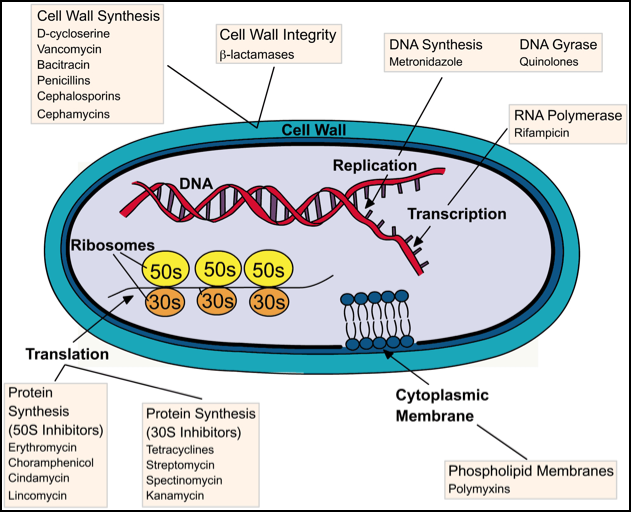
Screen Shot 2016-08-07 at 3.16.10 PM.png
Cell Wall Synthesis Inhibitors

Sunday, August 7, 2016

Sixth Semester at UTSW

Sixth Semester at UTSW
Updated: 08/07/2016
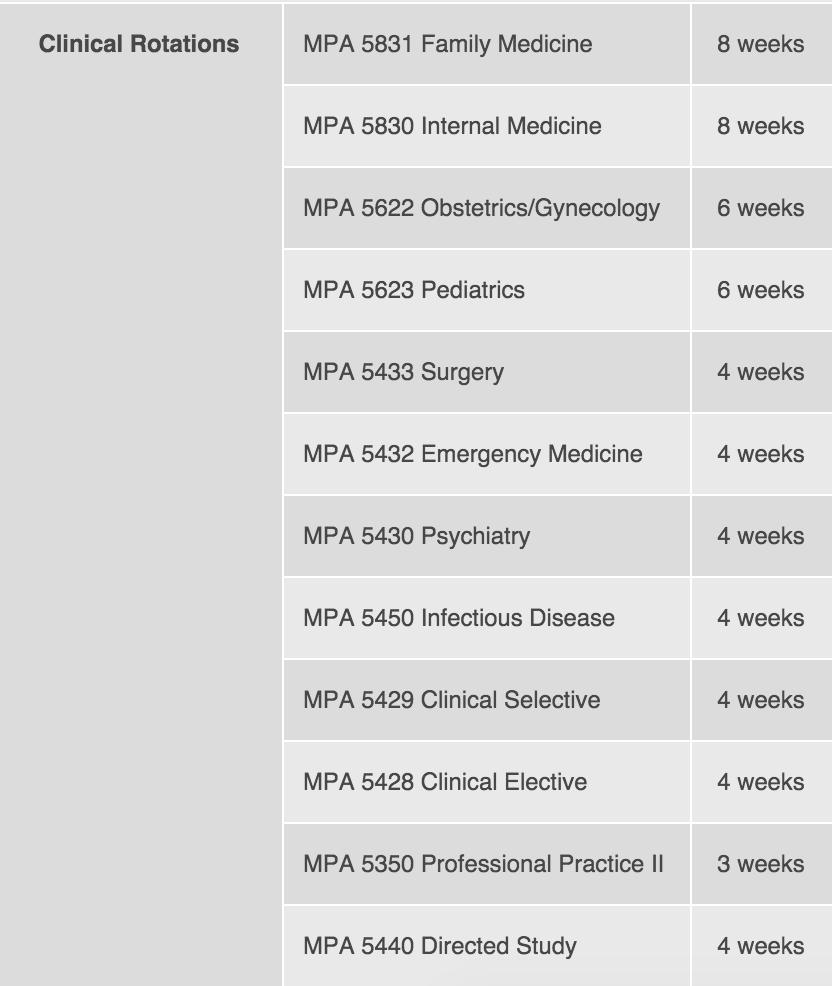
Below is a schedule taken from our program website detailing the clinical rotation schedule. Each student’s rotations are already set up for them (a huge plus), as I learned at the PAEA conference this year that not all PA programs do this. Some programs require that you setup your own rotations. Additionally, I appreciated an increased level of security that our rotations were quality - something not all programs ensure. Our rotations have been vetted before, dropping sites and preceptors who do not meet a high enough standard for our students. Our clinical coordinators have also done a great job of ensuring preceptors provide feedback to our students and that we get the most experience on each rotation, never being left in the shadows.


Screen Shot 2015-12-28 at 7.26.32 PM.png


This year our class also joined the many PA programs utilizing PAEAs end-of-rotation (EOR) examinations, streamlining the examination process and unifying rotation evaluation with an enhanced & secure online experience mirroring the PANCE. After each 120-question exam we received feedback about our performance, including a topic list of each type of question we missed and the task area. The content of the exams is provided by PAEA in a blueprint style and topic list format.


During the spring of 2016, I went through internal and family medicine, which were both 8 week long rotations. I was at Parkland and Zale-Lipshy hospital for my internal medicine rotation and I was in Bridgeport, Texas for my rural family medicine rotation. Both presented great opportunities for learning and included lots of 1-on-1 time with my preceptors as well as lots of procedural learning opportunities. Of note, since I was about 1 hour away from home during family medicine, my PA program located, secured, and paid for housing for all 8 weeks. This is something UT Southwestern does for all of its rural family medicine rotations - we are all very fortunate to have this provided for us.

Monday, July 11, 2016

Free Category 1 CME Credit Opportunity

Free Category 1 CME Credit Opportunity
Updated: 07/11/2016


I wanted to take the time to introduce Matt Borges, who has been a PA since 2007.  After graduating from Wake Forest University, Matt spent the majority of his professional career in emergency medicine, where he says every day is an opportunity to encounter the unexpected.  Over the last few years, he has had the pleasure of precepting students, which he claims to serve as a real life reminder that the more you think you know, the more you realize you always have plenty to learn.  


Over the past year, Matt has taken an interest in online educational webinars. While they were initially targeted toward PA students, they spread to an array of health care professionals. Webinars were originally designed to cater to APC's in emergency rooms, urgent cares, and primary care offices, but they also offer exposure to health professionals early in their careers who are still trying to sort what best suits their interests.  


Matt typically teams up with a physician, serving as the expert opinion in their particular field, and walks through cases pertinent to the particular topic. This format has been met with positive reviews, and offers a methodical approach to common issues encountered.  He works to produce webinars every few months, with free registration and opportunity for 1 hour of category 1 CME credit.  


The most current program is on common presentations of pediatric fevers in an ED, happening Tuesday July 12th at 7:30 PM-8:30 PM Eastern Time.  


Registration Here


I hope you'll find a topic that interests you, and check one out, soon!


--
Matthew M. Borges, PA-C, MMS
APC Director, Virginia Emergency Medicine Associates

Friday, July 8, 2016

Introduction to EKGs for Physician Assistants

Intro to Electrocardiograms for Physician Assistants
Updated: 07/08/2016


Electrocardiocardiograms can be difficult to tackle and I know that this is a topic that I repeatedly visit, both for simple things like delineating PVCs (premature ventricular contractions) from PACs (premature atrial contractions) and denoting what defines a second degree type 1 versus a second degree type 2 heart block. But there’s so much more than just that - there’s right and left bundle branch blocks, right and left ventricular hypertrophy, ischemia, infarction, axis deviation, atrial hypertrophy, etc. While this is a very limited approach to EKGs and while there is still much to learn about them, this is a great introduction to EKGs for any student, whether you are pre-med, pre-PA, pre-NP, pre-nursing, or pre any other health profession. At the end of the review are a few helpful questions provided by TrueLearn you can use after you’ve studied the review, which offer you some insight into the type of questions and degree of exam preparation offered. I hope that you find them as useful as I have. Good luck and let me know if there are any errors or questions!


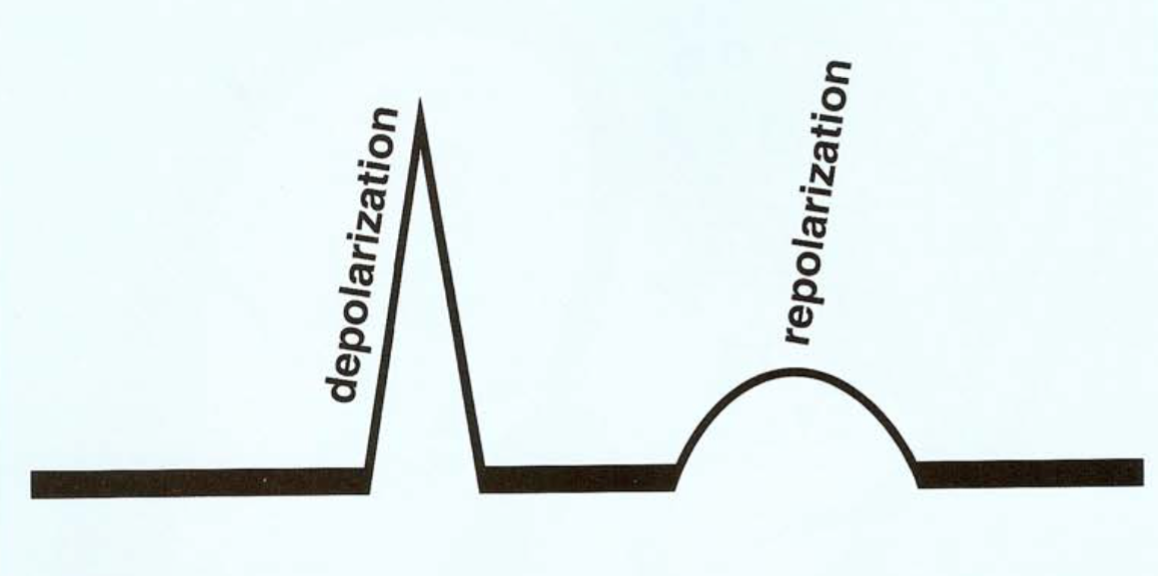
Electrocardiogram (ECG): records the electrical activity of the heart and information about the heart’s function and structure
Screen Shot 2016-06-20 at 9.22.18 PM.png

Tuesday, July 5, 2016

First Rounds Call For Articles


My Plans After Graduation
The flexibility of the PA profession allows us all to practice medicine in various specialties, subspecialties, primary care, population health, public policy, internationally, and beyond. Do you have any fascinating plans after PA school? Planning to work or volunteer abroad? Working for the Peace Corps? Applying for postgraduate fellowships, residencies, or other post-graduate training? First Rounds - PA Professional's student news section - is looking for stories about unique opportunities after PA school.

Tell us how your plans after PA school are unique. We ask that articles be no longer than 600 words and written in a conversational manner. For more information or to submit a proposal, contact First Rounds at FirstRoundsSubmission@gmail.com. First drafts are due by July 30th, 2016.

Monday, July 4, 2016

The PA Foundation Reception

The PA Foundation Reception
Updated on: 07/04/2016
A few months ago I was asked to speak at the PA Foundation’s Donor Recognition Breakfast at the 2016 AAPA Conference, which I was eager to accept especially after all that they had done for me in the preceding months. [Insert: I was previously accepted as one of the 18 recipients and the 2015 Bristol-Myers Squibb Endowed Scholarship Recipient]. More on Bristol Myers Squibb here.


I don’t say, ‘Thank You’ often enough for the hard work others put in, but it is definitely deserved. So, ‘thank you’ to everyone at AAPA and the PA Foundation who work tirelessly to ensure that students like myself can achieve their dreams of becoming a PA on top of making other milestones for our profession. Special thanks to Caroline Pierce and Key Ideas for working on my ‘impromptu nonsense of a speech’ and creating this incredible video to promote the PA Foundation Scholarships for future PA students.


Thursday, June 9, 2016

Introduction to Radiology for Physician Assistants

Introduction to Radiology for Physician Assistants
Updated: 06/09/2016
In this post, I hope to introduce you all to the differences between imaging modalities, including indications and contraindications. My goal is also to provide a basic understanding of the concepts surrounding density and normal x-ray findings. Future posts will investigate the findings for pneumonia, pneumothoraces, effusions, atelectasis, fractures/dislocations, arthritis, intracranial, GI and hepatic pathology, bowel, lines/tubes, and heart disease.

Conventional Radiography (Plain Films)
  • Images produced through use of ionizing radiation
  • No contrast material (barium or iodine)
    • Why it’s important: Large doses of radiation can produce cell mutations leading to cancer or anomalies. Even low levels of radiation are teratogenic (avoid in pregnancy).
  • Relatively inexpensive, obtained easily (portable, mobile), most widely used
  • Common uses: chest x-ray (CXR), abdominal x-ray, and for fractures or arthritis


Computed Tomography (CT or CAT Scans)
  • Uses a gantry with a rotating x-ray beam and multiple detectors with sophisticated algorithms to process the data
  • Expensive equipment, lots of space, and high computer processing power required

Friday, June 3, 2016

The Applicant’s Manual of Physician Assistant Programs

The Applicant’s Manual of Physician Assistant Programs
Updated: 06/03/2016
I met Mark Volpe in November 2015 at a the Inaugural Future Educator Fellowship (FEF) PAEA Conference. Mark is a standup guy and his dedication to aide pre-PA students after entering the workforce really speaks to his character and motivation. Mark is also the coauthor of a book inspired to help pre-PA students easily navigate the pre-application process in hopes to narrowing the search for a PA-program-home.
The Applicant’s Manual of Physician Assistant Programs provides tips and tricks for navigating the application process and gives students useful and comprehensive information about every single accredited PA program in the US. This not only saves the student time in the exhausting and taxing search through PA program websites, but also provides the most important information about each school in a single comprehensive text to use at your own disposal. This manual easily helps to narrow down your list of potential PA programs and gain a competitive edge - the first step to applying to PA school.

Key features include:
1. An introduction section which reviews the basics of the PA school application and admissions process

Tuesday, May 31, 2016

Pancreatitis and Pancreatic Cancer

Pancreatitis and Pancreatic Cancer
I can’t even stress to you how frequently PA students are tested over pancreatitis (acute and chronic) and pancreatic cancer. It seems to be one of those vague presentations that test writers take advantage of by placing in distractors (answers that seem right, but are in fact incorrect). This is meant to be a short, but hopefully helpful review of each of them, so that you are better prepared to tackle questions on these topics regardless of if they’re your in house exams during didactic, rotation exams, the PACKRAT, the PANCE, or the PANRE. I hope this helps you regardless of which avenue you find it useful. Good luck and make sure to check out TrueLearn’s free sample questions below! I’ll say, I loved their gastroenterology section the most. The vignettes were on point and difficulty wise - they were spot on with the rotation exams and PANCE-style questions.


Acute and Chronic Pancreatitis

Friday, April 22, 2016

Introduction to Behavioral Health

Introduction to Behavioral Health
Updated: 04/22/2016
The Multiaxial System - used previously in DSM 4 (now DSM 5 is used, but we should still understand and recognize the importance of these axes).
  1. Axis I – serious mental illnesses (mood, anxiety, eating, sleep, impulse-control, adjustment)
  2. Axis II – personality disorders +/- mental retardation
  3. Axis II – general medical conditions (neoplasms, injury, poisoning)
  4. Axis IV – psychosocial and environmental problems (educational problems, economic, housing, access to healthcare)
  5. Axis V – GAF (1-100) = global assessment of functioning

Terminology
AFFECT - The patient’s present emotional responsiveness, inferred from patient’s facial expression, including amount and range of expressive behavior [objective: what you observe about pt]

Appropriate
Inappropriate
Congruent
Incongruent
Appropriate amount of eye contact, facial expression, responsiveness, etc.
Incongruent with content or social norms
Psychotic content consistent with patient's mood
Psychotic content inappropriate to patient's mood

Restricted
Constricted
Blunted
Reduced intensity of affect – lesser degree than blunted
Restricted affect
Severe reduction in intensity of affect

Flat
Exaggerated
Labile
Virtually no signs of affective expression, no facial expression, monotonous voice
Dramatic, overly expressive
Fluctuating, rapid changes in emotion unrelated to external stimuli